Let’s be real: running a small business is like being a one-person circus. You’re the CEO, the janitor, and the customer support team all at once. In this chaos, SEO for small businesses often feels like a “nice to have” or, worse, a dark art involving secret incantations and high monthly retainers.
But here’s the truth: SEO (Search Engine Optimization) is simply the process of making sure your business shows up when people are looking for what you sell.
Whether you’re a local bakery or a niche tech startup, SEO for small businesses is the only marketing channel that works for you 24/7, even while you’re asleep (or finally taking a lunch break).
In this guide, we’ll break down how to implement an affordable SEO strategy that doesn’t require a Fortune 500 budget, ensuring your brand stands out in both traditional search engines and the new wave of AI-driven search.
What is SEO for Small Businesses?
At its core, SEO (Search Engine Optimization) is the process of making your website more visible on search engines like Google. For a small business, this isn’t just about “getting clicks,” it’s about getting the right clicks.
While a global corporation might chase broad terms, a successful small business focuses on intent. You want to be the answer when a local customer asks, “Where is the best [service] near me?” or “How do I solve [problem]?”
1. Defining a Winning SEO Strategy for Startups
Before you dive into the technical weeds, you need a plan. A generic approach won’t cut it. A tailored SEO strategy for startups focuses on high-impact, low-cost moves that build a foundation for long-term traffic.
Unlike massive corporations, startups need to be agile. Your SEO for small businesses plan should focus on “niching down.”
Don’t try to outrank Amazon for “shoes.” Instead, aim to dominate “handmade vegan leather boots in Brooklyn.”
Key Pillars of a Startup SEO Strategy:
- Keyword Intent: Are people looking for information (e.g., “how to clean boots”) or are they ready to buy (e.g., “buy leather boots online”)?
- Competitive Gap Analysis: Look at what your competitors are not doing.
- Scalability: Start with a few core pages and expand as you grow.
2. The Ultimate On-Page SEO Checklist for Small Businesses
On-page SEO is the art of telling Google (and its AI cousins) exactly what your page is about. If you want to master SEO for small businesses, your website needs to be as clear to a bot as it is to a human.
Pro-Tip: Google’s latest updates prioritize “Experience, Expertise, Authoritativeness, and Trustworthiness” (E-E-A-T). Don’t just write for keywords; write to solve a problem.
Your On-Page SEO Checklist:
- Title Tags: Include your primary keyword (SEO for small businesses) near the beginning.
- Meta Descriptions: Write compelling summaries that encourage clicks.
- Header Tags (H1, H2, H3): Use these to structure your content logically.
- Internal Linking: Link to your other relevant blog posts or service pages.
- Image Alt Text: Describe your images so search engines can “see” them.
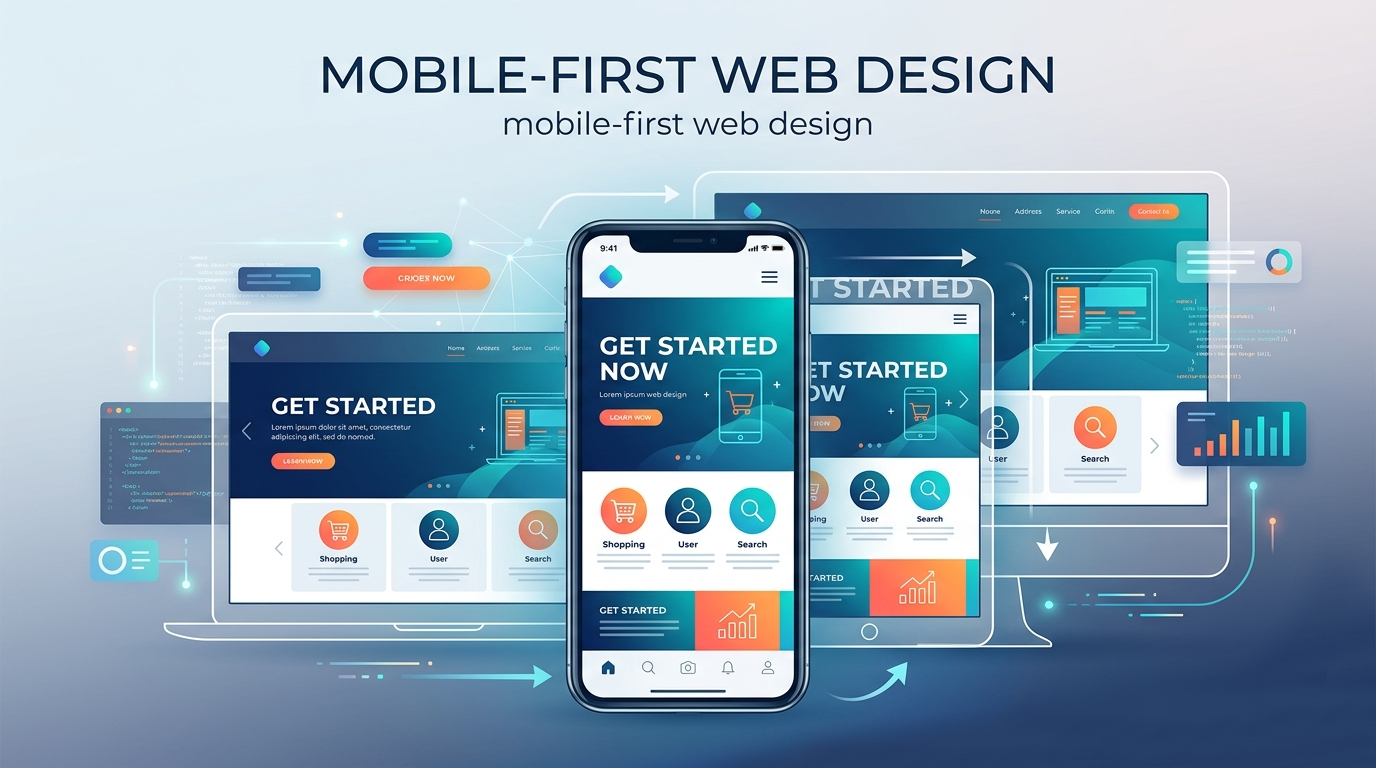
- Mobile Responsiveness: If your site doesn’t work on a phone, you’ve already lost.
By following this on-page SEO checklist, you ensure that the technical foundation of your SEO for small businesses is rock solid.
3. Making SEO Affordable: High Impact on a Budget
One of the biggest myths is that search optimization requires thousands of dollars a month. In reality, affordable SEO is about prioritizing your time.
If you are a founder, your time is money.
However, doing the initial legwork yourself, like keyword research and basic content creation, can save you a fortune. When looking for SEO for small businesses, focus on these “low-hanging fruit” tactics:
| Strategy | Cost | Impact |
| Google Business Profile | Free | Massive for Local Traffic |
| Content Blogging | Free/Low | High (Builds Authority) |
| Technical Site Audit | Free (using tools) | Medium (Fixes Errors) |
| Backlink Outreach | Time-Intensive | High (Builds Trust) |
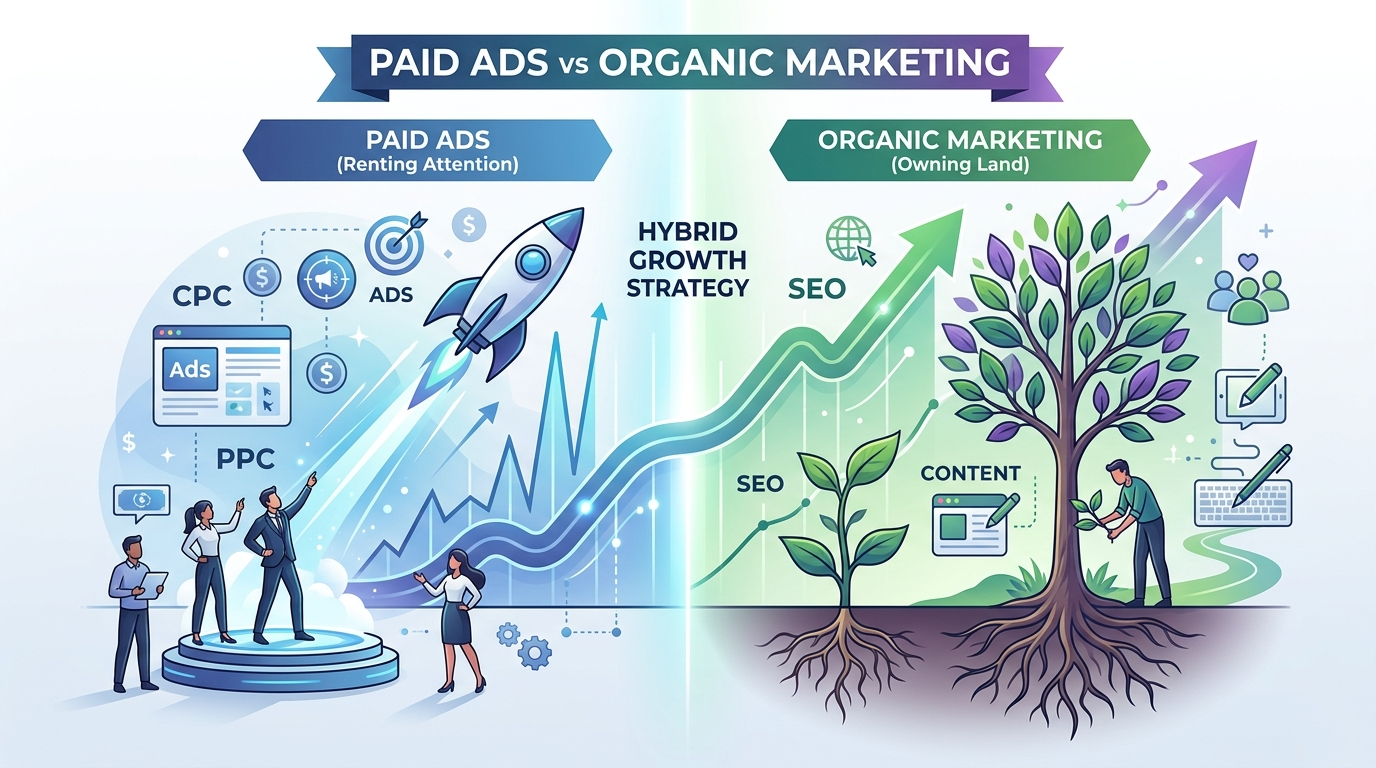
Implementing affordable SEO means you aren’t throwing money at ads that disappear the moment you stop paying. You’re building an asset.
4. The Essential Local SEO Guide for Growing Businesses
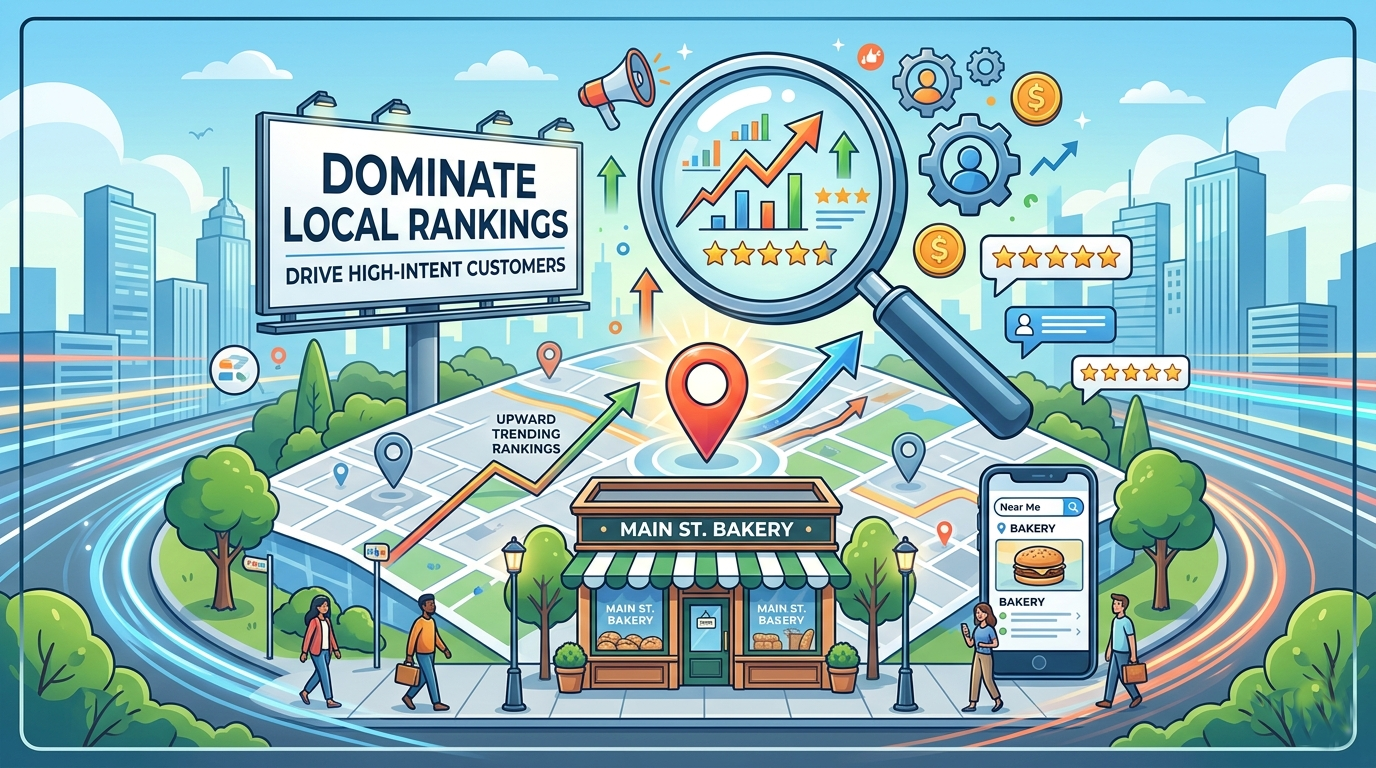
If you have a physical location or serve a specific geographic area, local search is your best friend. This local SEO guide segment is crucial for any SEO for small businesses roadmap because 46% of all Google searches are seeking local information.
1. Claim Your Google Business Profile (GBP)
This is the “Map Pack” you see at the top of search results. Fill out every detail: your hours, your services, and high-quality photos.
2. Gather Reviews Constantly
Reviews are a major ranking factor. Don’t be shy—ask your happy customers to leave a note. Pro-tip: Respond to every review, even the grumpy ones. It shows you’re a real human.
3. Local Citations
Ensure your Name, Address, and Phone Number (NAP) are consistent across the web (Yelp, Yellow Pages, Facebook). Inconsistent info confuses Google and hurts your SEO for small businesses.
5. Beginner SEO Tips to Get You Started Today
Feeling overwhelmed? Don’t worry. Every SEO pro started with these beginner SEO tips. The goal of SEO for small businesses isn’t to be perfect on day one; it’s to be better than you were yesterday.
- Install Google Search Console: It’s free and tells you exactly which keywords are bringing people to your site.
- Speed Matters: Use tools like PageSpeed Insights to make sure your site loads in under 3 seconds.
- Answer Questions: People search in the form of questions. If you answer them (e.g., “What is the best SEO for small businesses technique?”), you might land in a “Featured Snippet.”
- Avoid Keyword Stuffing: Don’t just repeat “SEO for small businesses” 50 times. Write naturally. If it sounds like a robot wrote it, a human won’t read it.
6. Optimizing for AEO and GEO: The Future of Search
Search is changing. With the rise of ChatGPT, Gemini, and Perplexity, we are moving into AEO (Answer Engine Optimization) and GEO (Generative Engine Optimization).
To ensure your SEO for small businesses remains relevant in 2025 and beyond, you need to provide direct, authoritative answers. AI engines scan for:
- Direct Answers: Use bulleted lists and concise definitions.
- Structured Data: Use Schema markup to help AI understand your data.
- Brand Mentions: The more you are mentioned on reputable sites, the more AI models “trust” you as a source.
Optimizing for these engines is the “secret sauce” of a modern SEO strategy for startups.
7. Measuring Your Success: KPIs for Small Business SEO
How do you know if your SEO for small businesses is actually working? You don’t need a PhD in analytics, but you should track these three things:
- Organic Traffic: Are the number of visitors from search engines going up month-over-month?
- Keyword Rankings: Are you moving from page 10 to page 1 for your target terms?
- Conversion Rate: Are those visitors actually buying things or signing up for your newsletter?
Remember, SEO for small businesses is a marathon. You might not see results in two weeks, but in six months, you’ll wonder how you ever lived without it.
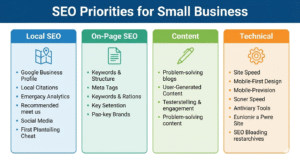
Frequently Asked Questions
Q: Is SEO worth it for small businesses?
A: Absolutely. Unlike paid ads that stop the moment you stop paying, SEO is an investment that compounds over time. It provides a continuous stream of “free” traffic.
Q: How long does SEO take to work?
A: Typically, you will start seeing significant movement in 3 to 6 months. It’s a marathon, not a sprint, but the finish line is a dominant market position.
Q: Can I do SEO myself?
A: Yes! By following this on-page SEO checklist and focusing on local SEO, most small business owners can handle the basics and see real growth.
Conclusion: Take the Leap into Search Success
Mastering SEO for small businesses is about consistency. You don’t need to be a technical genius; you just need to be helpful to your customers and clear to the search engines.
By combining a smart SEO strategy for startups with affordable SEO practices and a solid local SEO guide, you are positioning your brand for years of sustainable growth.
The digital landscape is crowded, but there is always room at the top for businesses that provide genuine value.
Read our other articles:
The Critical Importance of Brand Identity for Modern Business
Top 10 Effective Branding Strategies For Startups in 2026
Top 7 Web Development Trends 2026 You Must-Know
Custom Website vs Template? The Ultimate 2026 Guide
SEO for Small Businesses: The Ultimate 2026 Growth Guide