In a world where consumers are bombarded by thousands of advertisements every day, how does a business stay top-of-mind? The answer isn’t just a logo or a catchy slogan; it is a comprehensive brand identity design.
Whether you are a startup founder or an established marketing executive, understanding the nuances of how a brand looks, speaks, and feels is the difference between being a “commodity” and becoming a “household name.”
This guide explores everything you need to know about crafting a visual and strategic presence that resonates.
Let’s get started without further ado.
What is Brand Identity Design?
At its core, brand identity design is the collection of all elements that a company creates to portray the right image to its consumer. It is distinct from “brand image” (how the public perceives you) and “branding” (the active process of shaping a brand).
Think of your brand identity as the “face” of your business. It’s what allows your customers to recognize you in a crowded marketplace. It encompasses your values, your communication style, and how you want people to feel when they interact with your product or service.
Why It Matters in 2026
In the era of AI-generated content and hyper-personalization, a cohesive brand identity design acts as a trust signal. It proves that your business is legitimate, professional, and consistent. Without it, your marketing efforts will feel fragmented and forgettable.
The Essential Brand Identity Elements
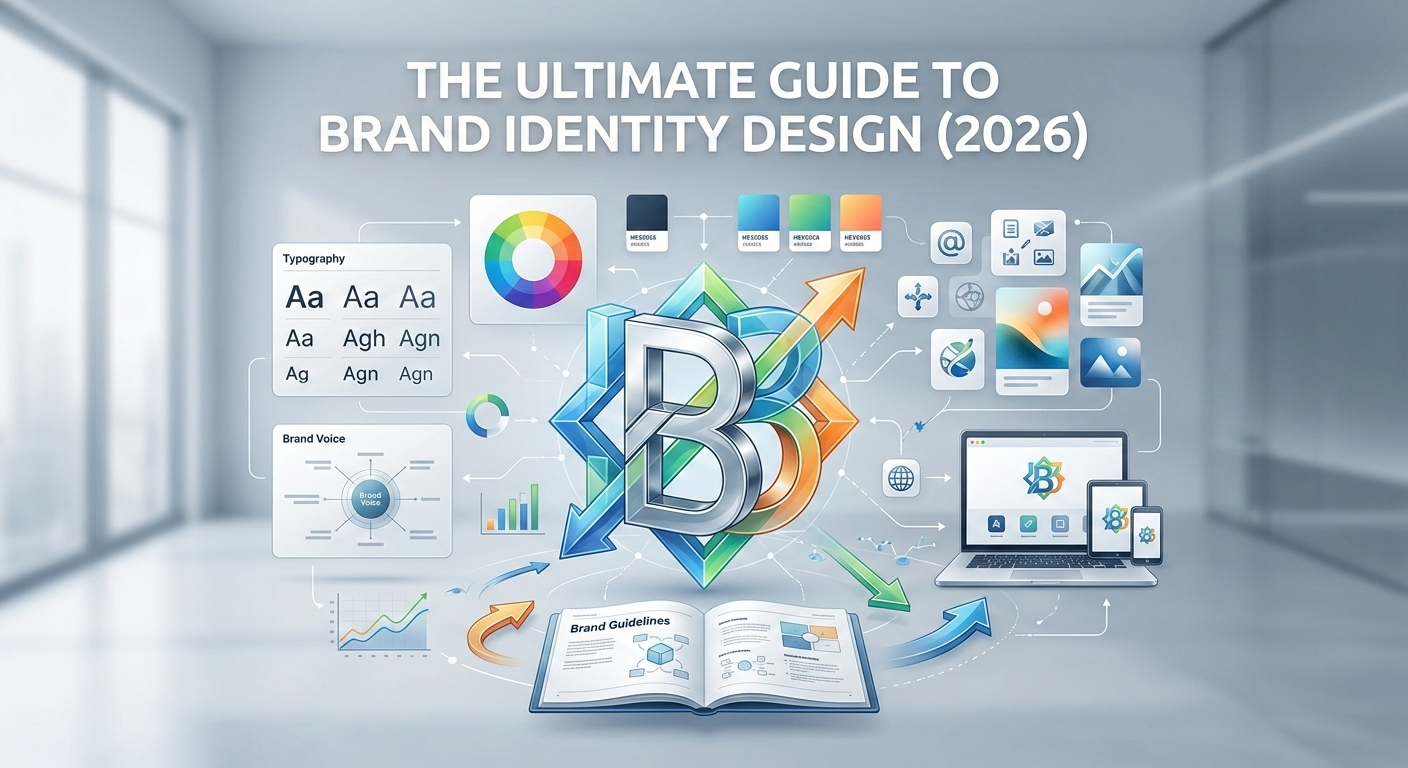
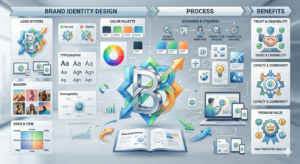
Creating a successful brand identity design requires more than just picking a pretty font. It involves a systematic approach to several visual and psychological components.
1. The Logo
While often confused with the brand itself, the logo is the central pillar of your brand identity design. It needs to be versatile, scalable, and memorable. Whether it’s a wordmark (like Google) or a symbol (like Apple), it serves as the shorthand for your company’s entire reputation.
2. Typography
The fonts you choose speak volumes before a user even reads the words. A high-end law firm might use sophisticated Serif fonts to convey tradition, while a tech startup might opt for clean, approachable Sans-Serif typefaces.
3. Color Palette
Color psychology plays a massive role in brand identity design.
- Blue: Trust, security, and stability (e.g., Chase, Facebook).
- Red: Energy, passion, and urgency (e.g., Coca-Cola, Netflix).
- Yellow: Optimism and warmth (e.g., McDonald’s, IKEA).
4. Imagery and Graphics
This includes the style of photography, icons, and illustrations used across your website and social media. Consistency here ensures that even without a logo present, a user can recognize your brand’s “vibe.”
Developing Comprehensive Brand Guidelines
Once you have established your brand identity design, you must protect it. This is where brand guidelines (often called a “Brand Bible”) come into play.
Brand guidelines are a set of rules that explain how your brand should be presented to the world. They ensure that whether a freelance designer creates a social post or a billboard company prints an ad, the brand remains consistent.
What to Include in Your Guidelines:
- Logo Usage: Minimum sizes, spacing (clearance), and “what not to do” (don’t stretch it!).
- Color Codes: Exact HEX, RGB, and CMYK values for digital and print.
- Tone of Voice: Is your brand witty and rebellious, or formal and authoritative?
- Editorial Standards: Specific grammar rules or preferred terminology.
By adhering to strict brand guidelines, you prevent “brand dilution,” the slow loss of brand recognition caused by inconsistent visuals.
The Step-by-Step Brand Identity Design Process
Creating a professional brand identity design isn’t an overnight task. It requires a blend of market research and creative intuition.
Step 1: Research and Strategy
Before opening a design tool, you must understand your audience. Who are they? What are their pain points? Analyzing your competitors’ brand identity design can also reveal “gaps” in the market that you can fill.
Step 2: Brainstorming and Visual Exploration
This usually involves creating “mood boards.” A mood board is a collage of images, textures, and colors that represent the desired “feeling” of the brand. This stage helps stakeholders align on a creative direction before high-fidelity work begins.
Step 3: Design Execution
This is where the brand identity elements come to life. Designers iterate on the logo, test color pairings for accessibility, and select typography that scales well across mobile and desktop interfaces.
Step 4: Testing and Refinement
Apply your brand identity design to real-world mockups. How does the logo look on a business card? Is the font legible on a smartphone screen? Feedback at this stage is crucial for longevity.
Beyond Visuals: The Role of Brand Personality
A truly effective brand identity design is backed by a soul. This is often referred to as “Brand Essence.” While the visual brand identity elements catch the eye, the personality keeps the customer engaged.
- Values: What does your company stand for? (e.g., Sustainability, Innovation, or Community).
- Mission Statement: A concise explanation of why you exist.
- Unique Selling Proposition (USP): What makes you different from everyone else?
Integrating these “intangibles” into your visual brand identity design ensures that your marketing isn’t just a facade; it’s an authentic representation of your business.
Optimizing Your Identity for Modern Search (AEO & GEO)
In 2026, brand identity design isn’t just for humans; it’s for algorithms too. Search engines now prioritize “Entities.” A well-defined brand helps Google, Bing, and AI-driven engines (like Perplexity or Gemini) understand that your business is a distinct, authoritative entity.
- Visual Search: By using consistent brand identity elements, AI models can more easily categorize your images in visual search results.
- Voice Search: A clear brand voice ensures that when AI assistants read your content, the tone remains consistent with your written brand guidelines.
- Schema Markup: Using Organization Schema on your website helps search engines link your logo, social profiles, and brand name together.
Conclusion: The Long-Term Value of Design
Investing in a professional brand identity design is an investment in your company’s future equity. It transforms a generic business into a recognizable brand that commands higher prices and fosters customer loyalty.
Remember, your identity is a living thing. While your brand guidelines provide a framework, your brand should evolve as your audience does. However, the core pillars of great design clarity, consistency, and character will always remain the same.
Frequently Asked Questions (FAQs)
What is the difference between branding and brand identity?
Branding is the active process of shaping how people perceive your company. Brand identity design is the specific collection of visual and tangible elements (logo, colors, typography) used to create that perception.
How much does a brand identity design cost?
Costs vary wildly based on the scope. A small business might spend between $2,000 and $10,000, while a global corporation might spend hundreds of thousands for a comprehensive strategy, brand identity elements, and global brand guidelines.
How often should I update my brand identity?
Most brands undergo a “refresh” every 5–7 years to stay modern. However, a complete overhaul of your brand identity design should only happen during a major pivot, merger, or if the current identity is actively hurting your reputation.
What are the most important brand identity elements?
While every element matters, the “Big Three” are the logo, the color palette, and the typography. These form the foundation of your brand guidelines and are the most recognizable features to consumers.
Can I create my own brand identity design?
While tools like Canva make it easier, a professional brand identity design requires a deep understanding of color theory, marketing psychology, and technical file preparation. Hiring a professional usually yields a much higher return on investment.
Read our other articles:
10 Common Logo Design Mistakes to Avoid in 2026
10 Proven Email Marketing Tips to Boost Conversions
Master Your Digital Marketing Strategy: The 2026 Growth Playbook