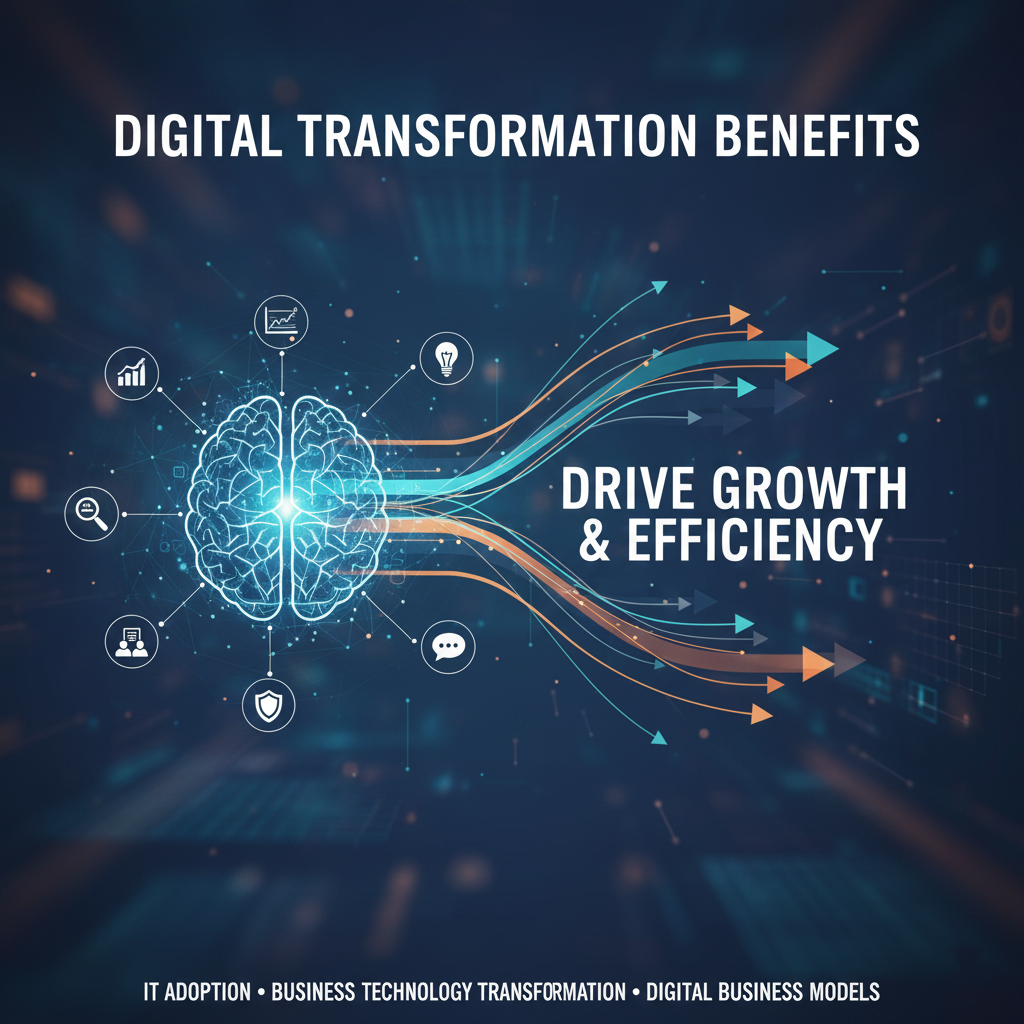
In the modern marketplace, “evolving” is no longer a choice; it’s a survival mechanism. For C-suite executives and business owners, understanding digital transformation benefits is the difference between leading a market and being left behind.
Digital transformation isn’t just about buying new software; it’s a foundational shift in how a business delivers value to its customers.
As we look at the current landscape, how digital tools help businesses has shifted from simple digitization (turning paper into PDFs) to true digital maturity.
This process involves integrating technology into every area of a business, fundamentally changing how you operate and deliver value.
Why Digital Transformation Benefits Matter Now
The pace of IT adoption has accelerated. Companies that lean into business technology transformation are seeing higher margins, better employee retention, and more resilient supply chains.
This guide explores the multifaceted advantages of going digital and how to leverage these shifts for long-term ROI.
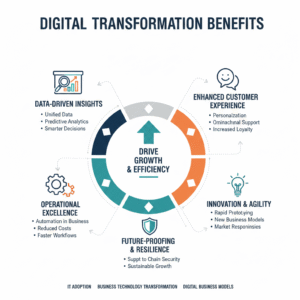
1. Enhanced Data Collection and Analysis
The most immediate of all digital transformation benefits is the ability to track, move, and analyze data. In a legacy system, data is often “siloed,” stuck in individual departments like sales or accounting.
- Unified Data Streams: Modern digital business models allow for a “single source of truth.”
- Actionable Insights: When you understand how digital tools help businesses process big data, you can move from reactive to proactive decision-making.
- Customer Intelligence: By leveraging automation in business for data gathering, you can see exactly how customers interact with your brand.
By focusing on business technology transformation, leaders can turn raw numbers into a strategic roadmap, ensuring that every dollar spent is backed by evidence rather than intuition.
2. Improved Customer Experience (CX)
At its core, digital transformation benefits the end-user the most. Today’s consumer expects a seamless, omnichannel experience. Whether they are on a mobile app, a desktop, or in a physical store, the transition should be invisible.
The Role of Personalization
How digital tools help businesses succeed today is largely through personalization. Using AI and machine learning, companies can offer tailored recommendations. This level of IT adoption builds brand loyalty that price-cutting alone cannot achieve.
Key Stat: Organizations that prioritize business technology transformation in their customer journey see a 20-30% increase in customer satisfaction scores.
3. Increased Agility and Speed to Market
One of the overlooked digital transformation benefits is organizational agility. A digital-first company can pivot much faster than one bogged down by manual processes.
- Rapid Prototyping: New digital business models allow companies to test products in virtual environments before a physical launch.
- Faster Feedback Loops: Using automation in business, companies can gather real-time feedback and iterate on products in weeks rather than months.
When you commit to business technology transformation, you reduce the “friction” of innovation. This allows you to respond to competitor moves or market shifts almost instantly.
4. Operational Efficiency Through Automation
If you are looking for the fastest ROI, automation in business is where you will find it. This is a primary driver of digital transformation benefits. By removing repetitive, manual tasks, you free up your human capital for higher-level strategic work.
How digital tools help businesses save time:
- Workflow Automation: Invoicing, payroll, and HR onboarding can be handled by software.
- Error Reduction: IT adoption reduces the “human error” factor in data entry and logistics.
- Resource Management: Modern ERP systems ensure that resources are allocated exactly where they are needed, minimizing waste.
The goal of business technology transformation is not to replace people, but to empower them to work on tasks that require creativity and empathy.
5. Fostering a Culture of Innovation
While we often focus on software, the true digital transformation benefits are cultural. To succeed in IT adoption, a company must encourage a mindset of continuous learning.
A successful business technology transformation breaks down departmental “walls.” When marketing, sales, and IT all use the same digital platforms, collaboration happens naturally. This shift towards modern digital business models creates an environment where employees feel empowered to suggest new ways of working, knowing the technology exists to support their ideas.
6. Improved Employee Productivity
When discussing how digital tools help businesses, we must look at the daily workflow of the average employee. Clunky, outdated systems are the leading cause of “digital fatigue.”
- Remote Work Enablement: Digital transformation benefits include the ability to hire talent globally, thanks to cloud-based collaboration tools.
- Reduced Silos: Through IT adoption, information flows freely, meaning employees spend less time searching for files and more time doing their jobs.
- Self-Service Portals: Using automation in business for internal requests (like IT support or leave applications) keeps the momentum going.
A holistic business technology transformation ensures that your team has the best tools available, which directly correlates to higher engagement and lower turnover rates.
7. Strengthening Supply Chain Resilience
Recent global events have highlighted why digital transformation benefits are essential for supply chain management. Companies relying on paper trails and phone calls struggled, while those with high IT adoption thrived.
By integrating automation in business into your logistics, you gain:
- Real-time inventory tracking.
- Predictive analytics to foresee shortages.
- Automated reordering systems.
Shifting to digital-first digital business models allows for “just-in-time” inventory, which reduces storage costs and increases liquidity a massive win for business technology transformation.
8. Better Resource Management
Digital transformation benefits extend to how you manage every asset in your company, from electricity to intellectual property.
Through business technology transformation, companies can use IoT (Internet of Things) sensors to monitor equipment health, preventing costly breakdowns before they happen. Furthermore, how digital tools help businesses manage digital assets ensures that your most valuable data is secure and accessible only to those who need it.
The integration of automation in business ensures that no resource, be it time, money, or talent, is left sitting idle.
9. Increased Revenue and Profitability
Ultimately, the most attractive of all digital transformation benefits is the impact on the bottom line. Research by Deloitte and McKinsey consistently shows that digitally mature companies are more profitable than their peers.
| Area of Impact | How Digital Tools Help Businesses | ROI Potential |
| Sales | AI-driven lead scoring and CRM integration | High |
| Marketing | Targeted ads and automated funnels | Medium-High |
| Operations | Automation in business is reducing overhead | High |
By embracing business technology transformation, you aren’t just spending money on IT; you are investing in a more scalable, profitable version of your company. New digital business models (like SaaS or subscription services) can also open up entirely new revenue streams that were previously impossible.
10. Future-Proofing the Business
The final and perhaps most vital of the digital transformation benefits is longevity. The “half-life” of a business today is shorter than ever. IT adoption is the shield that protects your company from obsolescence.
As AI, blockchain, and 5G continue to evolve, having a foundation built on business technology transformation means you can integrate these new technologies seamlessly. If your core is still analog, every new tech wave will feel like a crisis. If your core is digital, every wave is an opportunity.
Frequently Asked Questions (FAQs)
What are the main digital transformation benefits for small businesses?
The primary digital transformation benefits for smaller enterprises include cost reduction through automation in business, improved customer reach via digital marketing, and the ability to compete with larger corporations through high-level IT adoption. By understanding how digital tools help businesses scale without a massive increase in headcount, SMEs can achieve significant growth and operational agility.
How do digital tools help businesses stay competitive?
How digital tools help businesses stay competitive is primarily through data-driven agility. Companies that embrace business technology transformation can analyze market trends in real-time, allowing them to pivot their strategy faster than competitors relying on legacy systems. Furthermore, modern digital business models allow for better customer retention through personalized experiences and faster service delivery.
What is the first step in business technology transformation?
The first step in business technology transformation is conducting a thorough audit of your current processes to identify bottlenecks. Successful IT adoption starts with a clear strategy rather than just buying software. Leaders should identify which digital transformation benefits are most critical to their specific goals, whether that is increasing revenue, improving employee productivity, or enhancing security, and then select the appropriate tools.
How does automation in business impact ROI?
Automation in business impacts ROI by significantly reducing manual labor costs and eliminating human error in repetitive tasks. One of the key digital transformation benefits is the “multiplier effect,” where employees can handle a higher volume of work with less effort. Over time, the initial investment in business technology transformation is offset by lower operational overhead and increased throughput.
What are the risks of ignoring IT adoption?
Ignoring IT adoption puts a company at risk of total market obsolescence. Without a focus on business technology transformation, companies suffer from “data silos,” slow response times, and an inability to meet modern customer expectations. Missing out on digital transformation benefits often leads to higher long-term costs as maintaining legacy hardware becomes more expensive than migrating to efficient digital business models.
Can digital business models improve company culture?
Yes. While it seems counterintuitive, digital business models often improve culture by fostering transparency and collaboration. A core part of how digital tools help businesses is through centralized communication platforms that break down departmental silos. When automation in business handles the “drudge work,” employees are free to engage in more creative, fulfilling roles, which is a major pillar of business technology transformation.
Conclusion: Starting Your Digital Journey
The digital transformation benefits outlined above are not just for tech giants. Small and medium-sized enterprises (SMEs) can also reap massive rewards from IT adoption and automation in business.
To begin your business technology transformation, focus on one area, perhaps your customer data or your internal communication and see how digital tools help businesses like yours firsthand. The shift toward modern digital business models is a marathon, not a sprint, but the finish line is a more resilient, profitable, and innovative company.
Read our other articles:
The Critical Importance of Brand Identity for Modern Business
Top 10 Effective Branding Strategies For Startups in 2026
Top 7 Web Development Trends 2026 You Must-Know
Custom Website vs Template? The Ultimate 2026 Guide
SEO for Small Businesses: The Ultimate 2026 Growth Guide
10 Best Social Media Marketing Tips for Small Businesses