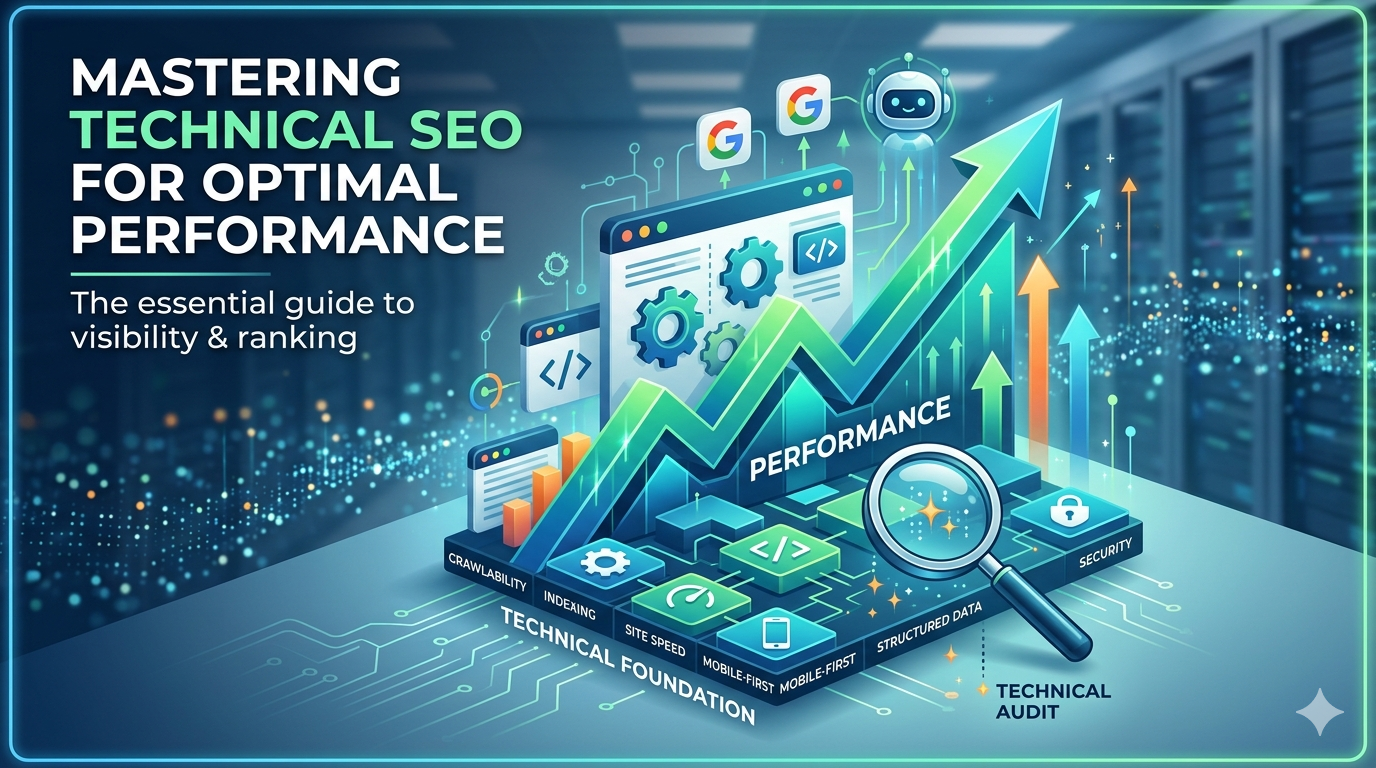
In the rapidly evolving digital landscape, having great content is only half the battle. To ensure your website actually reaches your target audience, the underlying infrastructure must be flawless. This is where technical SEO comes into play. It is the backbone of your digital presence, ensuring that search engine spiders can crawl, index, and understand your pages without friction.
Why Technical SEO is the Foundation of Your Strategy
Search engines like Google, Bing, and even emerging AI-driven search engines (GEO) prioritize user experience. If your site is slow, broken, or difficult for bots to navigate, your rankings will suffer regardless of how well-written your blogs are.
Investing in technical SEO isn’t just about pleasing an algorithm; it’s about creating a seamless, secure, and fast environment for your visitors. When you align your site’s technical health with search engine requirements, you pave the way for sustainable organic growth.
1. Conducting a Comprehensive Website Technical Audit
Before you can fix what’s broken, you need a clear map of your current standing. A website technical audit is a deep dive into your site’s health, identifying bottlenecks that hinder SEO performance.
Key Areas to Audit:
- Crawlability: Ensure that your robots.txt file isn’t accidentally blocking important pages.
- Indexability: Use Google Search Console to check for “Indexed but not submitted in sitemap” warnings or “Excluded” pages.
- Site Architecture: A flat hierarchy (where most pages are reachable in 3 clicks or less) helps both users and bots navigate efficiently.
By performing a regular website technical audit, you catch issues like 404 errors and redirect loops before they negatively impact your traffic.
2. Enhancing SEO Performance via Core Web Vitals
In 2026, page speed is no longer just a “nice to have”—it is a critical ranking factor. Google’s Core Web Vitals measure the real-world user experience of a page. To maintain high SEO performance, you must optimize for:
- LCP (Largest Contentful Paint): How fast the main content loads.
- INP (Interaction to Next Paint): How responsive the site is to user inputs.
- CLS (Cumulative Layout Shift): Ensuring visual stability so elements don’t “jump” while loading.
Optimizing images, leveraging browser caching, and using a Content Delivery Network (CDN) are essential steps in technical SEO to ensure these metrics stay in the “green” zone.
3. Master the Art of Schema Markup and Structured Data
As we shift toward Answer Engine Optimization (AEO) and Generative Engine Optimization (GEO), structured data becomes your most powerful tool. Schema markup is a code that you place on your website to help search engines provide more informative results for users.
By implementing a specific Schema (like Article, Product, or FAQ), you increase the chances of appearing in “Position Zero” or as a rich snippet. In the context of technical SEO, structured data acts as a translator, telling AI-driven search engines exactly what your data means, which is vital for appearing in AI-generated overviews.
4. Ensuring Mobile-First Excellence
The majority of global search traffic now comes from mobile devices. Google almost exclusively uses the mobile version of a site’s content for indexing and ranking. A core pillar of technical SEO is ensuring that your mobile site is not a “stripped-down” version of the desktop but a fully functional, high-performance experience.
Check for:
- Touch Elements: Are buttons too close together?
- Font Size: Is the text readable without zooming?
- Responsive Design: Does the layout adapt fluidly to all screen sizes?
Poor mobile optimization is one of the fastest ways to tank your overall SEO performance.
5. Securing Your Site with HTTPS and Robust Architecture
Security is a non-negotiable aspect of technical SEO. An SSL certificate (HTTPS) is a basic requirement for trust and ranking. Beyond security, your site’s URL structure should be clean and descriptive.
Avoid long, messy strings of numbers in your URLs. Instead, use keywords and hyphens to create “pretty” URLs that give both users and search engines a hint about the page’s content. This clarity helps maintain a high standard of SEO performance across the entire domain.
6. Managing Crawl Budget and Internal Linking
Search engines don’t have infinite time to spend on your site. The “crawl budget” is the number of pages a bot will crawl during a single visit. To optimize your technical SEO, you want to ensure the bots spend their time on your most important, high-value pages.
- Internal Linking: Use descriptive anchor text to link relevant pages. This distributes “link juice” and guides bots to deep-linked content.
- XML Sitemaps: Keep your sitemap updated and submitted to search engines so they can discover new content instantly.
- Handle Duplicate Content: Use canonical tags to tell search engines which version of a page is the “master” copy, preventing dilution of your SEO performance.
7. Preparing for AEO and GEO: The Future of Search
The rise of AI search means users are looking for direct answers rather than a list of links. To stay ahead in technical SEO, your site must be optimized for “Answer Engine Optimization” (AEO).
- Natural Language: Use conversational headers that mimic how people ask questions.
- Concise Summaries: Provide clear, 40-60 word summaries of complex topics.
- Data Integrity: AI engines prioritize highly authoritative, verified data.
Regularly conducting a website technical audit ensures that your structured data and site speed meet the rigorous demands of these new AI-driven platforms.
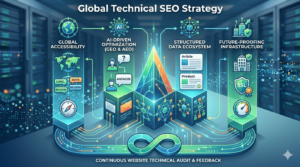
Summary Checklist for Success
- Run a website technical audit to identify crawl errors and broken links.
- Optimize Core Web Vitals to ensure your site is fast and responsive.
- Implement Schema Markup to feed search engines structured data.
- Audit your mobile experience to ensure it aligns with mobile-first indexing.
- Refine your internal linking to maximize crawl budget efficiency.
By mastering technical SEO, you aren’t just building for today—you’re future-proofing your website for the next generation of search.
FAQs: Common Technical SEO Questions
Q: How often should I perform a website technical audit?
A: For most medium-sized sites, a deep-dive audit should be conducted quarterly. However, if you are frequently adding new content or making structural changes, a monthly check-up is recommended to maintain peak SEO performance.
Q: Does technical SEO help with AI search rankings (GEO)?
A: Absolutely. AI models rely on clean, structured data to pull information. Without solid technical SEO, an AI engine might fail to parse your data, meaning you won’t show up in AI-generated answers or summaries.
Q: What is the most common technical error that hurts rankings?
A: Slow page load speeds and broken internal links are the most common culprits. Both significantly degrade the user experience and signal to search engines that the site is poorly maintained.
Q: Is HTTPS really that important for technical SEO?
A: Yes. Since 2014, Google has used HTTPS as a ranking signal. It protects user data and builds trust, which is a core component of high-level SEO performance.
Final Thoughts: The Path to Technical Mastery
Mastering technical SEO is not a one-time task but a continuous journey of refinement. As search engines transition into more sophisticated, AI-driven answer engines, the technical health of your website will determine whether you are viewed as an authority or lost in the noise. By prioritizing a regular website technical audit and staying vigilant about your SEO performance, you ensure that your platform remains accessible, fast, and highly relevant.
Investing in the infrastructure of your site today builds the resilience needed for tomorrow’s search landscape. Whether it’s through structured data, mobile excellence, or lightning-fast load times, the effort you put into your site’s backend will pay dividends in organic growth and user trust.
Read our other articles:
The Critical Importance of Brand Identity for Modern Business
Top 10 Effective Branding Strategies For Startups in 2026
Top 7 Web Development Trends 2026 You Must-Know
Custom Website vs Template? The Ultimate 2026 Guide
SEO for Small Businesses: The Ultimate 2026 Growth Guide
10 Best Social Media Marketing Tips for Small Businesses
10 Critical Digital Transformation Benefits for Growth
Scaling Businesses with Tech: The Ultimate 2026 Guide
10 Pro Tips to Choose the Best Web Development Company
Website Redesign Checklist: The Ultimate 2026 Guide
Custom Web Development vs WordPress: Which Is Better?
SEO for Beginners: The Ultimate 2026 Strategy Guide
10 Common Logo Design Mistakes to Avoid in 2026
10 Proven Email Marketing Tips to Boost Conversions
Master Your Digital Marketing Strategy: The 2026 Growth Playbook
The Ultimate On-Page SEO Checklist for 2026 Rankings
Website Speed Optimization: The 2026 SEO Growth Guide