
In the fast-evolving landscape of 2026, a static approach to visibility is no longer enough.
The traditional “ten blue links” on Google have been replaced by a sophisticated ecosystem of AI overviews, voice assistants, and personalized feeds.
To stay ahead, your digital marketing strategy must evolve from simple keyword targeting to a comprehensive framework that prioritizes human value and machine interpretability.
Whether you are a startup looking for rapid digital growth or an established brand refining your online marketing plan, understanding the intersection of search and generative AI is the key to dominance. This guide provides a deep dive into the modern mechanics of a high-performing digital marketing strategy.
Let’s get started.
1. The New Pillars of a Digital Marketing Strategy: SEO, AEO, and GEO
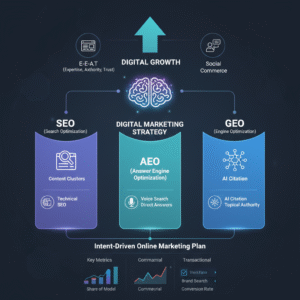
The foundation of any successful digital marketing strategy in 2026 rests on three distinct but interconnected pillars. Understanding these ensures your online marketing plan reaches users, however they choose to search.
Search Engine Optimization (SEO)
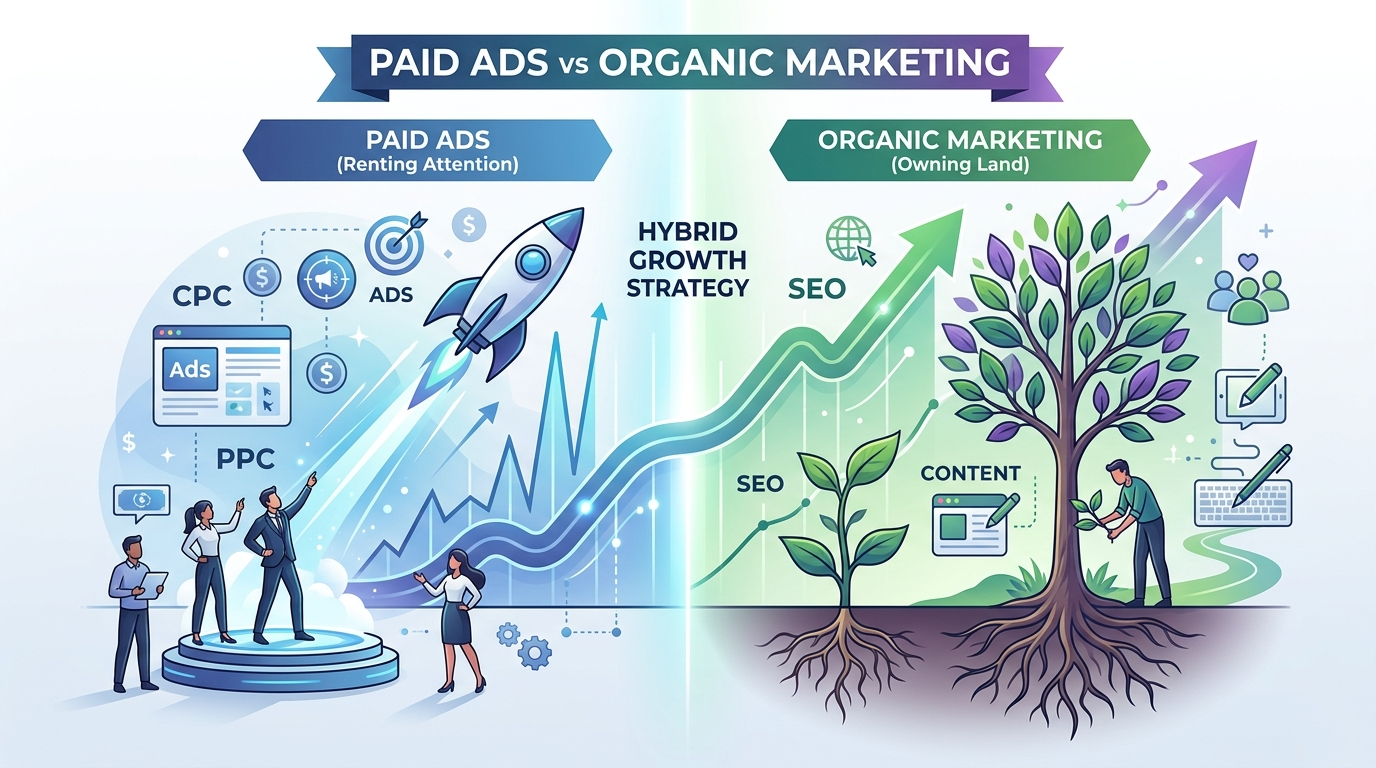
Traditional SEO remains the backbone of organic traffic. It focuses on ranking your website for specific queries. In 2026, this means obsessing over Search Experience Optimization (SXO), ensuring that once a user clicks, they find a fast, secure, and highly relevant environment that drives digital growth.
Answer Engine Optimization (AEO)
With the rise of voice search and “zero-click” queries, AEO is critical. AEO involves structuring your content to be the definitive, direct answer for AI assistants like Siri, Alexa, and Google’s Gemini. A winning digital marketing strategy now includes “Answer-First” design, where concise solutions are placed at the start of every section.
Generative Engine Optimization (GEO)
GEO is the newest frontier. It focuses on making your brand “cite-worthy” for Large Language Models (LLMs). When a user asks an AI to “recommend the best software,” GEO ensures your brand is the one synthesized into the response. This is a vital component of any modern online marketing plan aimed at long-term authority.
2. Building an Intent-Driven Online Marketing Plan
Search intent has shifted from “finding a website” to “solving a problem.” Your digital marketing strategy must map every piece of content to a specific stage of the buyer’s journey.
For a commercial intent where users are ready to evaluate or buy your online marketing plan should focus on high-value clusters.
- Informational Intent: Solving “How-to” problems to build trust.
- Commercial Investigation: Using comparison tables and “Best of” lists to aid decision-making.
- Transactional Intent: Optimized landing pages that make the “Buy Now” path frictionless.
By aligning your digital growth goals with these intents, you ensure that your digital marketing strategy doesn’t just attract visitors but converts them into loyal customers.
3. Semantic Content Clusters: Beyond Simple Keywords
Gone are the days of repetitive keyword stuffing. Today’s digital marketing strategy relies on topical authority. Search engines now use semantic analysis to understand the “meaning” behind your content.
To achieve sustainable digital growth, your online marketing plan should utilize content clusters. This involves creating a “Pillar Page” (a comprehensive guide on a broad topic) supported by “Cluster Content” (detailed articles on specific sub-topics).
For example, if your primary digital marketing strategy is focused on SaaS, your cluster might include:
- B2B content marketing
- SaaS demand generation
- Sales enablement content
This structure tells search engines and generative AI that you are a “source of truth,” a prerequisite for any online marketing plan seeking top-tier rankings.
4. Technical Foundations for Digital Growth in 2026
No digital marketing strategy can succeed on a broken foundation. Technical excellence is now a ranking factor for both traditional search and AI synthesizers. To ensure your online marketing plan supports rapid digital growth, focus on these technical must-haves:
Speed and Core Web Vitals
If your site takes more than 1.5 seconds to load, you are losing money. Google and AI crawlers prioritize “lightweight” sites. High performance is no longer a perk; it’s a core part of a digital marketing strategy.
Advanced Schema Markup
Structured data (Schema.org) acts as a translator for AI. By using FAQ, Organization, and Product schema, you help generative engines “read” your site. This is non-negotiable for an online marketing plan optimized for GEO and AEO.
Mobile-First and Accessibility
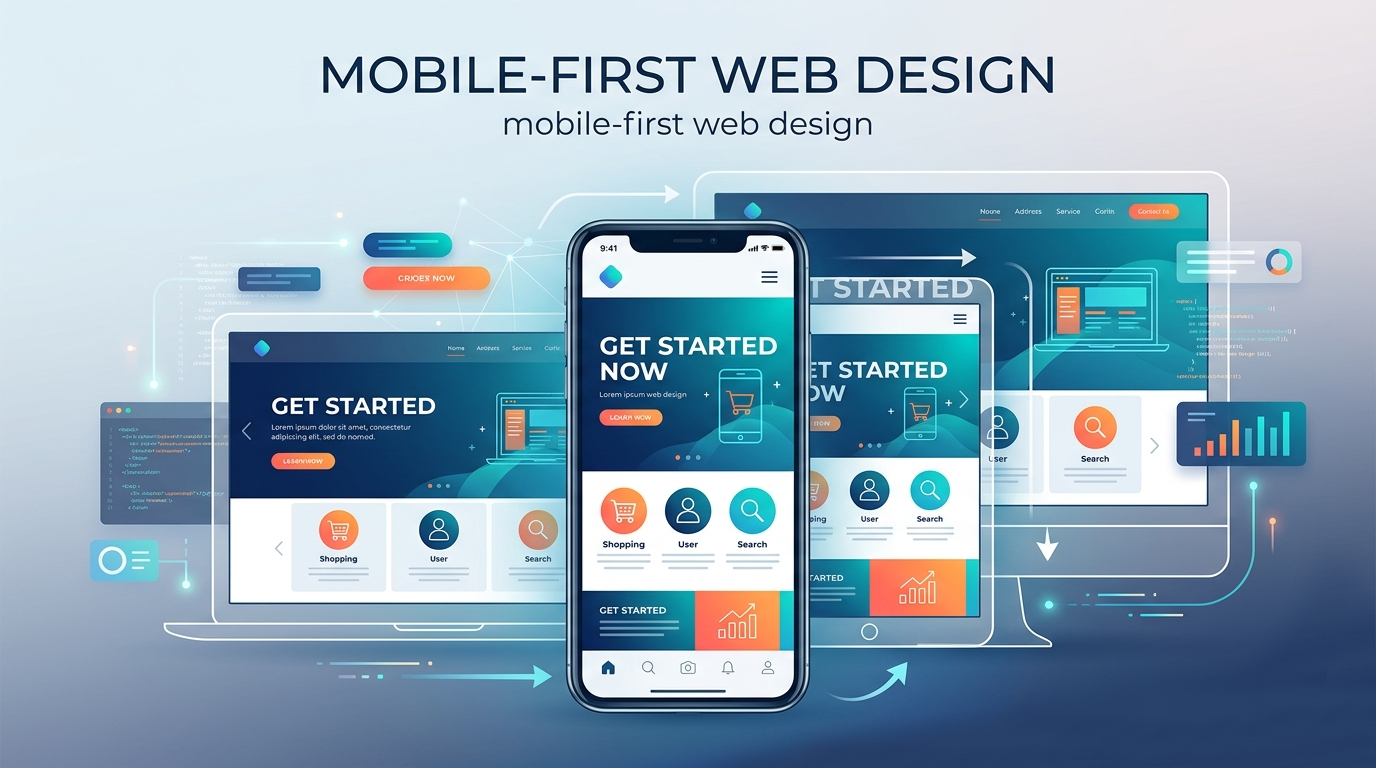
With over 70% of traffic coming from mobile, your digital marketing strategy must be mobile-native. Furthermore, accessibility (WCAG compliance) is now a signal of quality that AI models use to verify the reliability of a source.
5. E-E-A-T: The Human Element of Your Digital Marketing Strategy
As AI-generated content floods the web, “Human-First” signals have become the ultimate competitive advantage.
A successful online marketing plan must demonstrate E-E-A-T: Experience, Expertise, Authoritativeness, and Trustworthiness.
- Author Bios: Show that your content is written by real people with real credentials.
- Original Data: Conduct surveys or share case studies. AI cannot replicate original research, making it the “gold” of a digital marketing strategy.
- Case Studies: Real-world proof of results is the fastest way to drive digital growth through trust.
When your online marketing plan prioritizes transparency, you become a brand that AI tools feel “safe” recommending to their users.
6. Social Commerce and Community-Centric Digital Growth
In 2026, your digital marketing strategy must extend beyond your website.
Discovery is happening on Reddit, Discord, and TikTok. An effective online marketing plan integrates community-led growth (CLG).
- Micro-Influencers: Partnering with niche creators who have high trust-equity.
- Community Engagement: Actively participating in industry-relevant subreddits or forums.
- Shoppable Content: Reducing the gap between “seeing” and “buying” on social platforms.
By diversifying your touchpoints, your digital marketing strategy creates a surround-sound effect that reinforces your brand’s authority and fuels digital growth.
7. Measuring Success in a Zero-Click World
The KPIs for your digital marketing strategy have changed. While “Total Clicks” still matters, they don’t tell the whole story. A modern online marketing plan should track:
| Metric | Why it Matters |
| Share of Model (SoM) | How often do AI tools (ChatGPT, Gemini) mention your brand? |
| Featured Snippet Impressions | Visibility for AEO and direct answers. |
| Brand Search Volume | The number of people searching for you by name (the ultimate trust signal). |
| Conversion Rate per Intent | Measuring how well your online marketing plan moves users from “Learning” to “Buying.” |
Focusing on these metrics ensures your digital marketing strategy is aligned with how people actually interact with the web in 2026.
Frequently Asked Questions
What is the difference between SEO, AEO, and GEO?
SEO (Search Engine Optimization) focuses on ranking in search results. AEO (Answer Engine Optimization) focuses on being the direct answer for voice and text-based queries. GEO (Generative Engine Optimization) focuses on being cited and synthesized by AI models like ChatGPT or Perplexity. All three are essential for a complete digital marketing strategy.
Why is topical authority important for digital growth?
Topical authority proves to search engines that your site is an expert on a specific subject. Instead of ranking for one keyword, a digital marketing strategy built on topical authority allows you to rank for hundreds of related terms, leading to more sustainable digital growth.
How often should I update my online marketing plan?
The digital landscape changes rapidly. While your core digital marketing strategy should be reviewed quarterly, your tactical online marketing plan should be adjusted monthly based on performance data and new AI search trends.
Can AI write my entire digital marketing strategy?
AI is a powerful tool for research and drafting, but it lacks the “human-in-the-loop” insight needed for high-level strategy. A winning digital marketing strategy requires human oversight to ensure brand voice, factual accuracy, and original insights that AI cannot generate.
Conclusion: Future-Proofing Your Digital Success
A robust digital marketing strategy is no longer a “set it and forget it” project. It is a living framework that balances technical precision with authentic human connection.
By focusing on a holistic online marketing plan that covers SEO, AEO, and GEO, you position your brand as an unshakeable authority in your niche.
The path to digital growth in 2026 is clear: be the answer, be the source, and be the brand that users and machines can trust.
Read our other articles:
The Critical Importance of Brand Identity for Modern Business
Top 10 Effective Branding Strategies For Startups in 2026
Top 7 Web Development Trends 2026 You Must-Know
Custom Website vs Template? The Ultimate 2026 Guide
SEO for Small Businesses: The Ultimate 2026 Growth Guide
10 Best Social Media Marketing Tips for Small Businesses
10 Critical Digital Transformation Benefits for Growth
Scaling Businesses with Tech: The Ultimate 2026 Guide
10 Pro Tips to Choose the Best Web Development Company
Website Redesign Checklist: The Ultimate 2026 Guide
Custom Web Development vs WordPress: Which Is Better?
SEO for Beginners: The Ultimate 2026 Strategy Guide