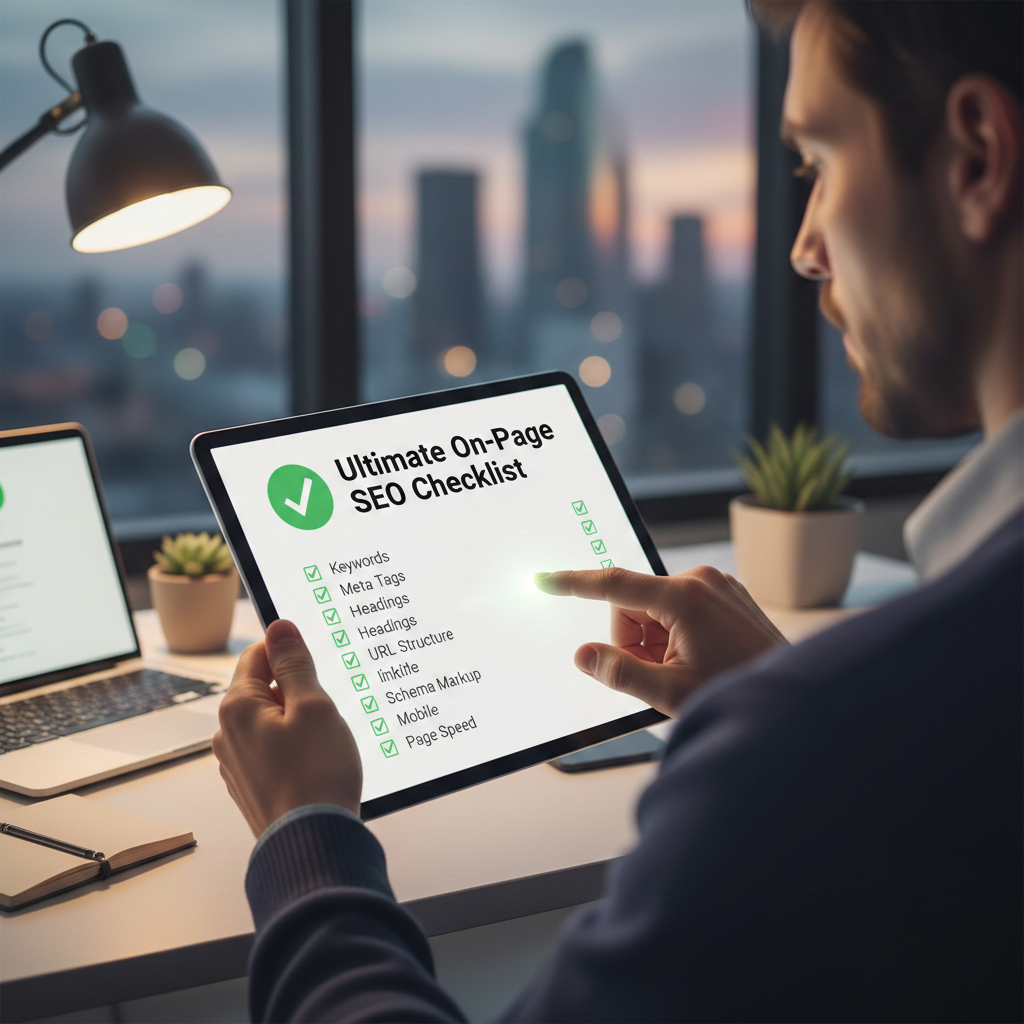
If you’ve been chasing the top spot on Google, you’ve likely realized that SEO isn’t a “set it and forget it” game. It’s a meticulous craft. While off-page signals like backlinks are vital, your foundation starts right on your own website.
This comprehensive on-page SEO checklist will guide you through the technical and creative tweaks needed to satisfy both human readers and search engine algorithms.
By mastering on-page optimization, you ensure that your content isn’t just great, it’s discoverable.
Let’s get started without further ado.
1. Start with Strategic Keyword Placement
Before you write a single word, you need a roadmap. Search engines have evolved, but they still rely on specific signals to understand what your page is about.
- The Golden Rule: Place your primary on-page SEO checklist keyword within the first 100 words of your content. This tells Google immediately what the core topic is.
- Avoid Keyword Stuffing: While you want to mention your target phrases, they must flow naturally. Modern AI-driven search engines (and your readers) can spot forced keywords a mile away.
- LSI Keywords: Integrate Latent Semantic Indexing (LSI) terms like “search volume,” “internal linking,” “user experience,” and “content quality” to provide context.
2. Master the Meta Tags
Your title tag and meta description are your “digital storefront.” They are the first things a user sees in the Search Engine Results Pages (SERPs).
Title Tags
Your title should be compelling and include your primary keyword toward the beginning. For this on-page SEO checklist, we aim for a balance between SEO power and click-through rate (CTR).
Meta Descriptions
While not a direct ranking factor, a well-written meta description improves CTR. Be sure to include your primary keyword and a clear call to action (CTA).
3. High-Quality Content is King
In 2026, SEO best practices revolve around E-E-A-T (Experience, Expertise, Authoritativeness, and Trustworthiness). Google’s “Helpful Content” updates prioritize pages that actually solve a user’s problem.
- Search Intent: Is the user looking to buy, or are they looking for information? Since the intent of an on-page SEO checklist is informational, your content should be educational and exhaustive.
- Readability: Use short sentences and paragraphs. Aim for a 7th or 8th-grade reading level to ensure your content is accessible to a wide audience.
4. Optimize Your Heading Tags (H1-H6)
Headings aren’t just for style; they create a hierarchy for search engines to crawl.
- H1 Tag: Use only one H1 per page. It should contain your primary on-page SEO checklist keyword.
- H2 & H3 Tags: Break down your subtopics using secondary keywords, like on-page optimization. This makes the post scannable for “skimmers.”
5. Image Optimization and Alt Text
Images make your blog post engaging, but they can slow down your site if not handled correctly.
| Optimization Task | Why It Matters |
| File Compression | Improves page load speed, a core ranking factor. |
| Descriptive Filenames | Helps search engines “see” the image (e.g., on-page-seo-checklist.jpg). |
| Alt Text | Essential for accessibility and allows images to rank in Google Images. |
6. URL Structure and Permalinks
Keep your URLs short, clean, and descriptive. Avoid long strings of numbers or dates. A perfect URL for this post would be yoursite.com/on-page-seo-checklist/. This tells the user and the engine exactly what to expect.
7. Internal and External Linking
Linking is the “web” that holds the internet together.
- Internal Links: Link to other relevant posts on your site. This keeps users on your site longer and distributes “link juice” (page authority).
- External Links: Link to high-authority sources (like Google Search Central or Moz). This shows you’ve done your research and are following SEO best practices.
8. Mobile-First and Core Web Vitals
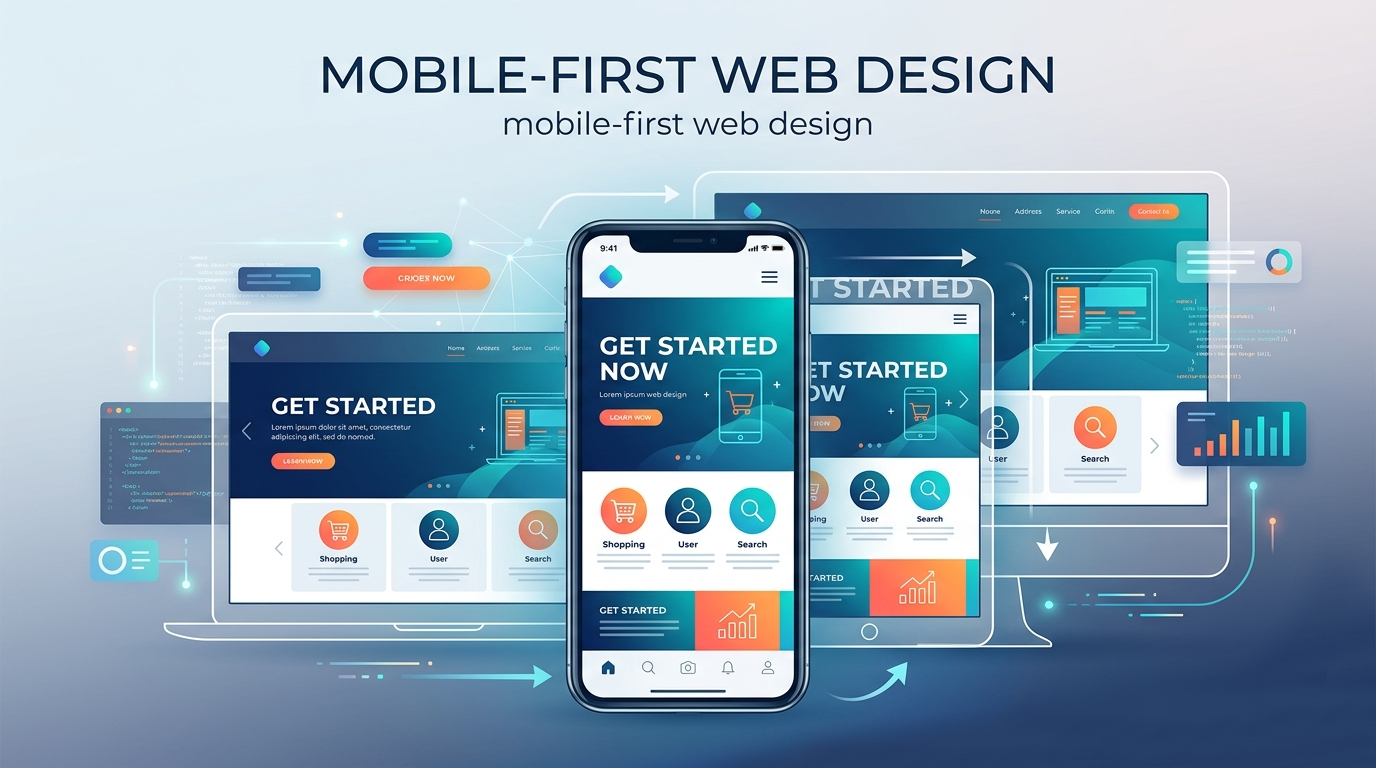
More than 60% of searches happen on mobile devices. If your on-page SEO checklist isn’t mobile-friendly, you’ve already lost.
- Responsive Design: Your site should adapt to any screen size.
- Page Speed: Use tools like Google PageSpeed Insights to check your “Largest Contentful Paint” (LCP) and “Cumulative Layout Shift” (CLS). A fast site is a ranking site.
9. Optimizing for AEO and GEO
With the rise of Answer Engine Optimization (AEO) and Generative Engine Optimization (GEO), your content needs to be structured for AI.
- Direct Answers: Start sections with clear, concise definitions.
- Structured Data (Schema Markup): Use Schema to help AI search engines understand the specific data points of your on-page optimization strategy. This increases your chances of appearing in “Featured Snippets.”
10. User Engagement and “Dwell Time.”
Google tracks how long users stay on your page. If they “bounce” back to the search results immediately, it signals that your content wasn’t helpful.
- Use Multimedia: Embed videos or infographics to keep users engaged.
- Interactive Elements: Tables, checklists, and bullet points (like the ones in this on-page SEO checklist) make the content easier to digest.
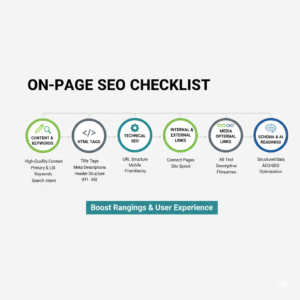
The Ultimate On-Page SEO Checklist (Summary)
To ensure you haven’t missed a beat, here is a quick summary of on-page optimization essentials:
- Primary keyword in the H1, first paragraph, and URL.
- Subheadings (H2, H3) are used for organization.
- Images have descriptive Alt Text.
- Internal links to 2-3 other pages.
- External links to 2-3 authoritative sources.
- Page loads in under 2 seconds.
- Schema markup implemented.
Frequently Asked Questions (FAQs)
What is an on-page SEO checklist?
An on-page SEO checklist is a list of optimization tasks performed directly on a webpage to improve its search engine ranking and user experience. It includes content quality, keyword placement, and technical elements like meta tags.
How does on-page optimization differ from off-page SEO?
On-page optimization refers to factors you control on your own website (content, HTML, speed). Off-page SEO refers to actions taken outside your website to impact rankings, such as building backlinks or social media marketing.
Why are SEO best practices important for AI search?
AI search engines (AEO/GEO) prioritize structured, clear, and authoritative content. Following SEO best practices ensures that AI models can easily parse your data and present it as a top answer to user queries.
How many times should I use my primary keyword?
There is no “magic number.” Focus on natural integration within your on-page SEO checklist. Aim for a keyword density of around 1-2%, ensuring the text remains helpful and readable for humans.
Conclusion
Mastering your on-page SEO checklist is the fastest way to see movement in the SERPs. By focusing on user experience, technical health, and semantic content, you’re building a digital asset that will drive organic traffic for years to come.
Read our other articles:
The Critical Importance of Brand Identity for Modern Business
Top 10 Effective Branding Strategies For Startups in 2026
Top 7 Web Development Trends 2026 You Must-Know
Custom Website vs Template? The Ultimate 2026 Guide
SEO for Small Businesses: The Ultimate 2026 Growth Guide
10 Best Social Media Marketing Tips for Small Businesses
10 Critical Digital Transformation Benefits for Growth
Scaling Businesses with Tech: The Ultimate 2026 Guide
10 Pro Tips to Choose the Best Web Development Company
Website Redesign Checklist: The Ultimate 2026 Guide
Custom Web Development vs WordPress: Which Is Better?
SEO for Beginners: The Ultimate 2026 Strategy Guide
10 Common Logo Design Mistakes to Avoid in 2026
10 Proven Email Marketing Tips to Boost Conversions
Master Your Digital Marketing Strategy: The 2026 Growth Playbook